
Break into and succeed as a Fashion Trend Forecaster / Analyst.
Our fashion trend intelligence course takes you from curious outsider to confident forecaster, training you the real methodology, the real tools (WGSN, Heuritech, social listening), and the real deliverables that agencies, retailers, and brands actually hire for.
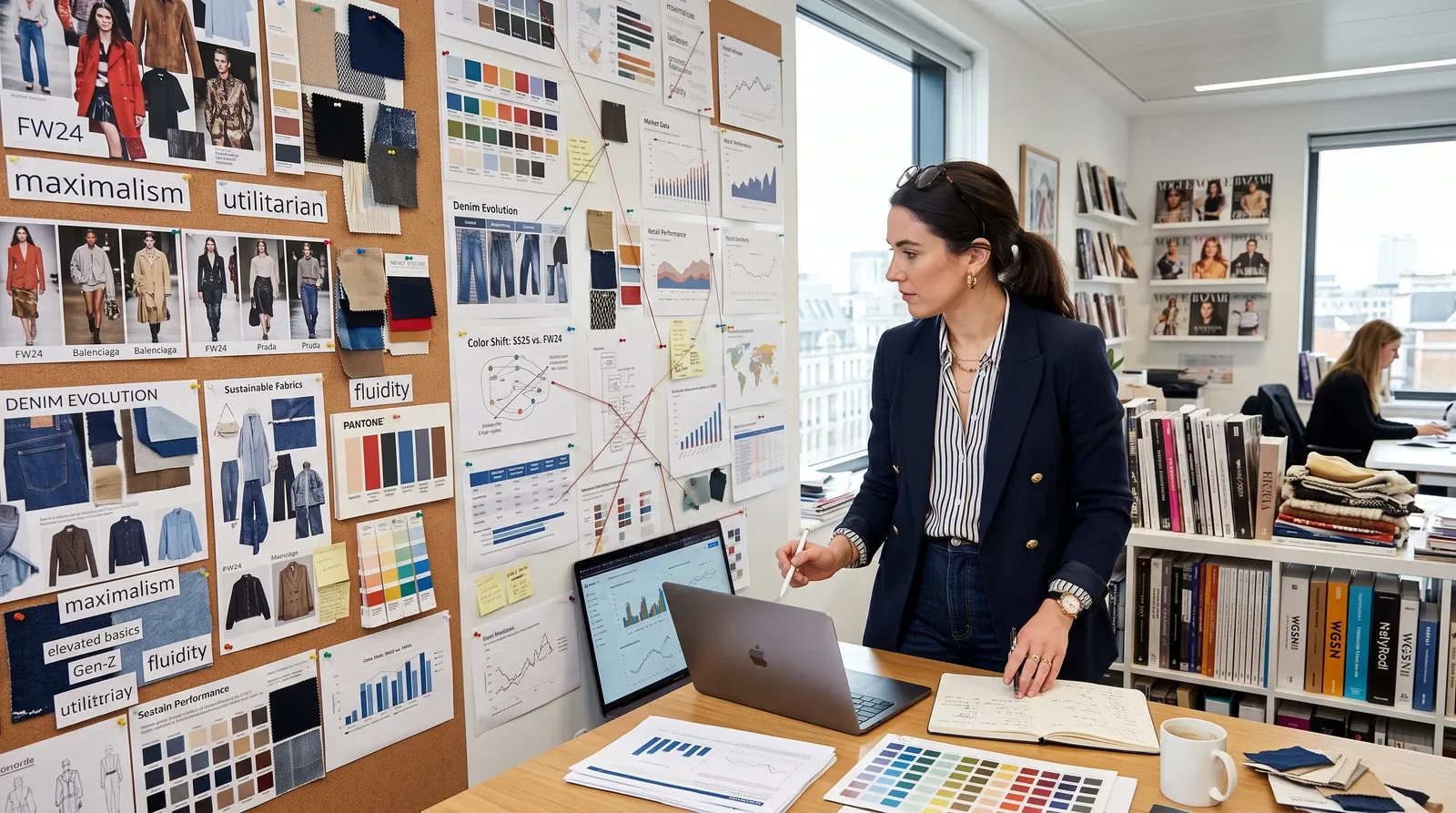
"I'm not teaching you to admire trends — I'm teaching you to build a forecast that a design team or buying director can actually act on."
— Jennifer Xue of StyleCareer.com
What you'll learn
What you'll be able to do
- Build and deliver a complete seasonal trend report — including color story, silhouette direction, and cultural narrative — to professional agency standards
- Use AI forecasting tools (Heuritech, WGSN, social listening platforms) to detect, validate, and contextualize trend signals at scale
- Conduct primary and secondary trend research across runway, street style, cultural archives, and cross-industry signals
- Adapt a single trend forecast for three distinct market tiers — luxury, mass market, and fast fashion — for different client types
- Assemble a portfolio of case studies, mood boards, and trend decks that demonstrates forecasting expertise to hiring managers
- Navigate the job market with confidence: ace trend-pitch interviews, identify the right entry points, and build a personal brand as a forecasting authority
How it works
A school that adapts to you
This isn't a set of static videos. Every lesson is generated live and tuned to where you actually are.
We learn your level
A quick placement check tailors your starting point so you're never bored or lost.
Lessons adapt as you go
Each lesson is written for your pace and your goal, adjusting as your skills grow.
Your AI coach keeps you moving
Checkpoints, feedback, and gentle nudges turn progress into a real result.
The curriculum
What's inside your school
12 modules · 48 lessons

Myths & Realities of the Fashion Trend Forecaster Profession
Clears up misconceptions about the role and sets accurate expectations for what trend forecasting work really involves.
- 1.1What a Trend Forecaster Actually Does (vs. What People Think)Included
- 1.2Myth-Busting: "It's Just Guessing What's Trendy" and Other MisconceptionsIncluded
- 1.3Trend Forecaster vs. Fashion Data Analyst vs. Buyer vs. Merchandiser — Clarifying the ConfusionIncluded
- 1.4A Day in the Life: Real Trend Forecasters, Real WorkflowsIncluded
Foundations of Trend Forecasting
Builds the conceptual and historical grounding every forecaster needs before picking up a research tool.
- 2.1The History and Evolution of Fashion Forecasting as a DisciplineIncluded
- 2.2Types of Trends: Macro, Micro, Seasonal, and CulturalIncluded
- 2.3The Forecasting Timeline: Long-Range, Short-Range, and Reactive ForecastingIncluded
- 2.4Key Roles in Forecasting (Junior Forecaster to Director of Trend Intelligence)Included
Trend Research Methodology
Teaches a rigorous, repeatable research process spanning primary observation, secondary sources, and cultural trend drivers.
- 3.1Primary Research: Street Style, Runway, and Consumer ObservationIncluded
- 3.2Secondary Research: Historical Archives, Cultural Signals, and Cross-Industry TrendsIncluded
- 3.3Identifying Trend Drivers: Culture, Technology, Economics, PoliticsIncluded
- 3.4Practical Exercise: Conduct a Primary Trend Research StudyIncluded
AI-Powered Trend Research Tools
Equips students to use the leading AI forecasting and social listening platforms as working professionals do.
- 4.1The AI Forecasting Stack: Heuritech, WGSN & Social Listening PlatformsIncluded
- 4.2Using AI for Image Recognition and Social Trend DetectionIncluded
- 4.3Combining AI Data with Human Judgment and Cultural ContextIncluded
- 4.4Practical Exercise: Build an AI-Assisted Trend Signal ReportIncluded
Color, Print & Silhouette Forecasting
Develops the visual forecasting skills required to predict and communicate direction across color, print, and silhouette.
- 5.1Forecasting Color Direction: Methodology and Color Story DevelopmentIncluded
- 5.2Print and Pattern Trend ForecastingIncluded
- 5.3Silhouette and Shape ForecastingIncluded
- 5.4Practical Exercise: Build a Seasonal Color and Silhouette StoryIncluded
Consumer & Cultural Trend Analysis
Trains students to decode generational shifts, subcultures, and social media to ground forecasts in human behavior.
- 6.1Understanding Generational and Subcultural ShiftsIncluded
- 6.2Reading Social Media as a Trend IndicatorIncluded
- 6.3Connecting Trends to Consumer Values and BehaviorIncluded
- 6.4Practical Exercise: Analyze a Cultural Shift and Its Fashion ImpactIncluded
Building Trend Reports & Presentations
Develops the visual, written, and structural skills needed to produce agency-standard trend reports and decks.
- 7.1Anatomy of a Professional Trend ReportIncluded
- 7.2Visual Storytelling: Mood Boards, Trend Boards, and DecksIncluded
- 7.3Writing for Trend Reports: Clarity, Persuasion, and InsightIncluded
- 7.4Practical Exercise: Build a Complete Seasonal Trend ReportIncluded
Forecasting for Different Clients & Markets
Teaches students to tailor a single forecast for different market tiers, client types, and global versus regional contexts.
- 8.1Forecasting for Fast Fashion vs. Luxury vs. Mass MarketIncluded
- 8.2Forecasting for Retailers vs. Brands vs. AgenciesIncluded
- 8.3Adapting Forecasts for Global vs. Regional MarketsIncluded
- 8.4Practical Exercise: Adapt One Trend Forecast for Three Market TiersIncluded
Translating Forecasts Into Business Decisions
Bridges forecasting output and commercial decision-making, showing students how their work drives real business action.
- 9.1How Designers Use Trend ForecastsIncluded
- 9.2How Buyers and Merchandisers Use Trend ForecastsIncluded
- 9.3Measuring Forecast Accuracy and Learning from MissesIncluded
- 9.4Practical Exercise: Present a Trend Forecast to a Mock Design TeamIncluded
AI & Technology Transforming Trend Forecasting
Examines the expanding AI landscape — its power, its blind spots, and the ethical responsibilities it creates for forecasters.
- 10.1The Expanding AI Forecasting Landscape: Predictive Analytics at ScaleIncluded
- 10.2Using AI for Demand-Linked Trend ValidationIncluded
- 10.3AI's Limitations: Cultural Nuance, Bias, and the Human EdgeIncluded
- 10.4Ethical Considerations: Data Privacy, Algorithmic Bias, and Over-AutomationIncluded
Building Your Portfolio & Personal Brand
Guides students in assembling a compelling forecasting portfolio and building a visible professional identity online.
- 11.1What a Trend Forecasting Portfolio Should IncludeIncluded
- 11.2Building Case Studies from Trend Reports and PredictionsIncluded
- 11.3Establishing Authority: Newsletter, Social Presence, and Thought LeadershipIncluded
- 11.4Practical Exercise: Assemble Your Trend Forecasting PortfolioIncluded
Breaking Into the Industry & Career Growth
Equips students with job-search strategy, interview skills, and networking tactics to land their first forecasting role.
- 12.1Entry Points: Junior Forecaster, Trend Intern, and Freelance PathsIncluded
- 12.2Acing the Forecasting Interview (Trend Pitches & Case Studies)Included
- 12.3Networking: Conferences, Trade Shows, and Industry CommunitiesIncluded
- 12.4Where to Apply: Forecasting Agencies, Retailers, and Brand In-House TeamsIncluded
Who it's for
Is this you?

Recent fashion graduates
She has the design or merchandising degree but wants to pivot into the analytical forecasting lane before her career path gets locked in.

Stylists going analytical
He has sharp visual instincts and deep trend awareness but needs the methodology and credentials to translate that into a forecaster role.

Fashion assistants leveling up
She's already inside a brand or agency and wants to move from supporting role to junior forecaster with a portfolio that proves she's ready.

Career-changers entering fashion
He's coming from marketing, data, or another industry and needs a structured entry point into fashion forecasting that respects his existing analytical skills.

Freelancers building authority
She does creative or content work in the fashion space and wants to add trend forecasting to her offer — with the reports and portfolio to back it up.

Data analysts eyeing fashion
He's comfortable with platforms and data pipelines and wants to learn the cultural and visual fluency that turns raw trend signals into commercially useful forecasts.
Questions
Frequently asked
Your teacher
A note from your teacher

Jennifer Xue of StyleCareer.com
If you've ever described yourself as someone who "just gets trends" — and then wondered why that hasn't translated into a forecasting job — I want to talk to you about what's actually missing.
It's not taste. It's not connections. It's not the right internship or the right degree. What's missing is the methodology. The ability to walk into a room — or onto a Zoom with a buying director — and explain why a trend is emerging, when it will peak by market tier, how you validated it across runway, street, and AI-generated signal data, and what the brand should do about it. That's what trend forecasting actually is. And that's precisely what no one teaches you unless you're lucky enough to sit next to the right senior forecaster for a few years.
I built Trend Intelligence Academy to compress that learning curve. Everything in this curriculum reflects the real workflow of the profession — from the research stack (yes, we go deep on WGSN and Heuritech, and yes, we talk about their limits) to the structure of a professional trend report, to the exact format of a trend-pitch interview. I'm not teaching you to admire trends. I'm teaching you to build a defensible, commercial forecast that a design team, a buyer, or a retail client can act on.
The practical exercises aren't optional extras — they're the point. Every section of this curriculum is designed to produce something: a seasonal color and silhouette story, an AI-assisted signal report, a forecast adapted for three market tiers, a portfolio case study. By the end, you won't be describing yourself as someone who gets trends. You'll be showing people a body of work that proves it.
The forecasting industry needs rigorous, culturally fluent analysts who also understand data. That combination is rarer than you think — and if you're willing to do the work, there's a real place for you in it. This is where you learn to earn it.
— Jennifer Xue of StyleCareer.com
Start your journey today
Get instant access — learn at your own pace with an AI coach in your corner.
$39/mo
Recurring billing · cancel anytime
Secure checkout · Instant access
- 12 modules, 48 lessons
- AI-adaptive lessons tuned to your level
- Quizzes & checkpoints to lock in progress
- Your own AI learning coach
- Learn on any device, at your pace
- Full access for as long as you're subscribed